
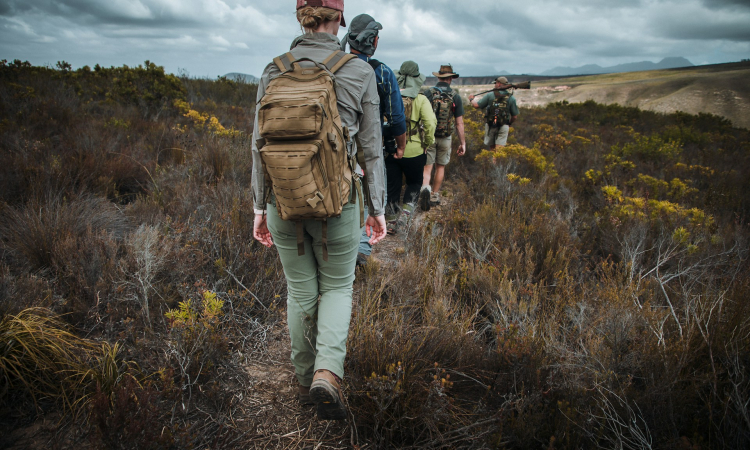
Walking safaris are available in Queen Elizabeth National Park. The park has some of the best hiking trails, and walking safaris give tourists a closer experience with nature and wildlife. These safaris take place in selected areas, and safety is always a top priority to make sure the experience is enjoyable.
One of the main locations for walking safaris is Kyambura Gorge, also called the “Valley of Apes.” It is home to chimpanzees, which are closely related to humans. Sometimes it may be hard to find the chimpanzees, but seeing them is a very rewarding experience. Tourists also get to enjoy beautiful views of the landscapes, birds, butterflies, and other animals.
Another good place for walking safaris is the Mweya Peninsula. This area gives tourists a chance to see many types of trees and birds. From here, you also get clear views of the Kazinga Channel and Lake Edward. Walking here is a bit easier because the land has gentle slopes.
The Ishasha Sector, known for its tree-climbing lions, is another popular area for walking safaris. These walks mostly happen near the Ishasha River. Tourists may see animals like buffaloes, Uganda kobs, elephants, and many birds.
All walking safaris are led by trained park rangers from the Uganda Wildlife Authority or licensed tour guides. These guides help explain animal behavior and show tourists the best spots for seeing wildlife and enjoying nature.
Walking safaris usually last between 2 to 4 hours, depending on the area you choose. These safaris are not only for seeing animals but also for visiting nearby local communities. Here, tourists can learn about the culture and traditions of the people who live near the park.
Safety is very important during walking safaris. Tourists must follow the rules, such as keeping quiet, staying close to the group, and listening to the guide at all times.
The best times for walking safaris are early in the morning and late in the afternoon. The weather is cooler, and animals are more active during these times. Walking safaris are best done during the dry season, from June to August and December to February, when the trails are easier to use.
Walking safaris in Queen Elizabeth National Park offer a close and peaceful way to connect with nature.


