
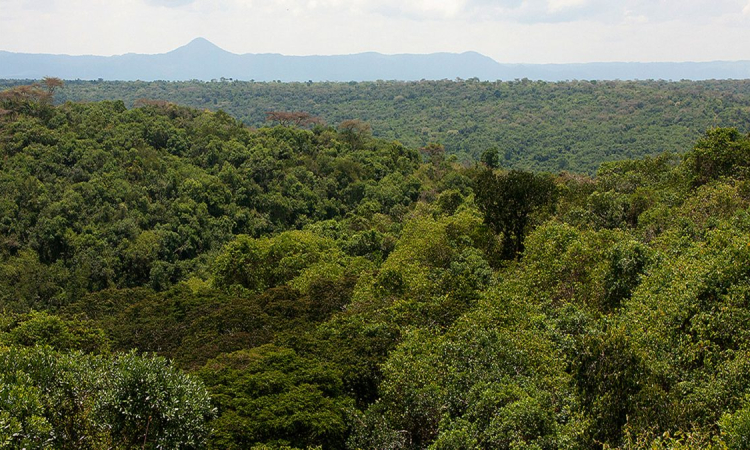
The water that drips from the trees in Maramagambo Forest continues to flow until the sun dries it up, showing the beauty of this natural place. The forest is well protected and managed by the Uganda Wildlife Authority, along with the National Forestry Authority.
This forest is home to several primates because of the many trees and fruits that provide them with food. Some of the primates you may see here include chimpanzees, red-tailed monkeys, and others.
The dry season is usually the best time to visit Maramagambo Forest. The ground is dry, which makes trekking easier and more comfortable. During the wet season, the forest has more fruit and attracts more primates to one area. However, the trails become muddy, it rains more often, the environment gets colder, visibility is low, and some parts may flood or become hard to access. That is why it’s important to plan your visit based on the season.
Activities in Maramagambo Forest include nature walks and hiking, which are done in shifts so all visitors have a chance to enjoy them. These activities usually take about one to two hours and can take up half a day.
Maramagambo Forest is located in Bushenyi District, near Queen Elizabeth National Park to the north, around Kichamba, which also connects to Lake Edward. Because of this, it is easy for tourists to visit both Maramagambo Forest and Queen Elizabeth National Park during the same trip.
In 2023, the government began planning to turn Maramagambo Forest into a national park. This decision came after concerns about illegal deforestation and tree cutting in the area.
The name “Maramagambo” has a local story behind it. According to the people in the area, many years ago, two boys entered the forest and got lost for several days. When they finally returned home, they were too shocked to speak. Because of this, the forest was named “Maramagambo,” meaning “the place of no words.”
Besides its interesting story, the forest is also known for its bat caves, which are filled with bats and attract many visitors. Maramagambo is also close to Lake Kyasanduka and Lake Nyamasingiri, which bring more wildlife like antelopes, birds, red-tailed monkeys, and chimpanzees into the forest.


