
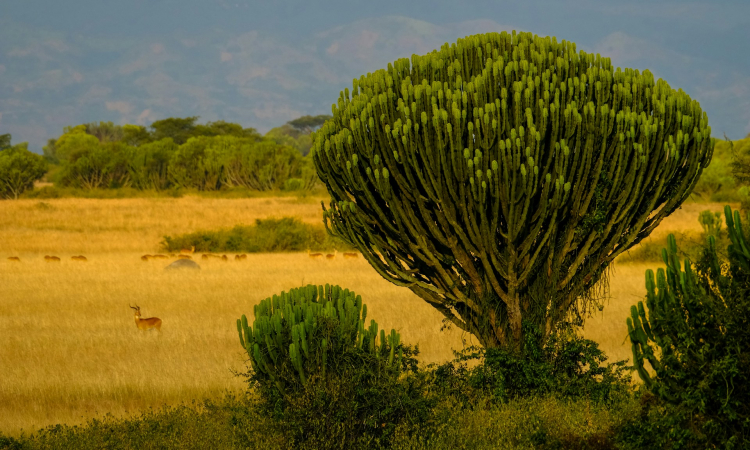
Ecosystem of Queen Elizabeth National Park – Knock on the gates of Queen Elizabeth National Park and step into a rich ecosystem that includes tropical forests, green grasslands, Savannah plains, rivers, swamps, and lakes.
These lakes are home to many aquatic animals, including tilapia fish. Many wild animals live here too, from grass-eating animals that are calm and less dangerous to meat-eating animals that hunt for food. The park also has reptiles, primates, and many birds that attract tourists.
Some bird species commonly seen include the shoebill stork, falcons, eagles, black bee-eaters, lesser flamingos (often found around Lake Katwe), kingfishers, grey crowned cranes, collared pratincoles, great blue turacos, pink-backed pelicans, African emerald cuckoos, African skimmers, African spoonbills, great white pelicans, grey-headed kingfishers, long-crested eagles, swamp flycatchers, water thick-knees, white-winged terns, and white-winged warblers, among many others.
Wetlands, forests, and Savannahs in the park support many animals like lions, elephants, hippos, zebras, antelopes, Uganda kobs, buffaloes, rhinos, giraffes, chimpanzees, monkeys, snakes, lizards, wild pigs, crocodiles, turtles, giant forest hogs, common warthogs, side-striped jackals, and Bohor reedbucks.
The wide grasslands provide good feeding grounds for animals like elephants, buffaloes, and zebras. This helps their numbers grow, although they are sometimes hunted by meat-eating animals.
The Kazinga Channel supports the whole ecosystem. It connects Lake Edward and Lake George and is recognized as a Ramsar site because of its ecological importance.
The park also has many crater lakes that were formed by volcanic activity. These were once large mounds that later filled with water and became salty lakes. Lake Katwe is one of them and is known for salt mining. Many local people work there, and this supports their families.
Over 20,000 people live around the park, spread across the ten areas of the reserve. These areas are also home to large animals such as elephants, hippos, buffaloes, and topis. Lions and leopards are some of the main meat-eating animals found in the park.
Queen Elizabeth’s ecosystem has helped support conservation education, research, and wildlife monitoring. These efforts have brought more tourists to the park and have helped Uganda’s tourism industry grow. Tourism is now the country’s second highest source of income.
Queen Elizabeth National Park is truly a special place filled with natural beauty and rich wildlife.


