
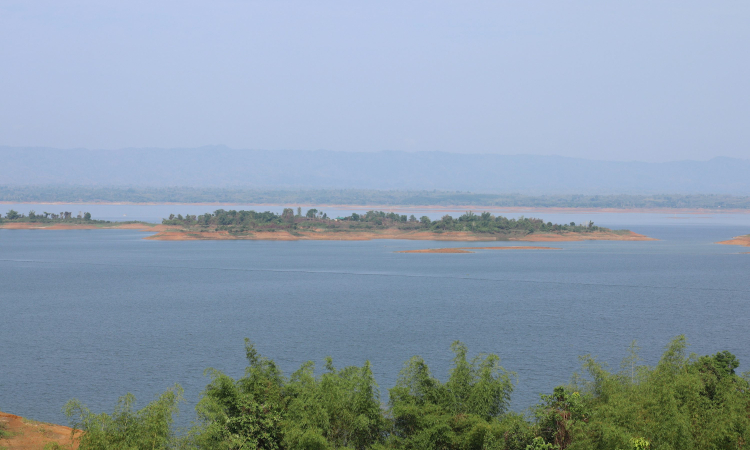
From east to west, there is no natural force that seems able to break the connection between Lake Edward and Lake George, which are linked by the Kazinga Channel. Lake George is not very large compared to other lakes, but it supports many types of wildlife, including fish and birds. Over 150 bird species live around the lake, such as the saddle-billed stork. The lake covers a total area of about 898 square miles.
Lake George supports not only animals but also people who live near it. These people speak similar local languages known together as Runyakitara. They include the Batoro, Basongora, Banyampaka, and Banyankore. The lake provides water for home use, small factories, and fishing. All these people use the word “Akatunguru,” which means “onion” in English, to describe the lake because it looks like the shape of an onion.
Lake George is also called Lake Katunguru. It covers about 250 square kilometers and is grouped under the African Great Lakes system, although it is not officially one of the Great Lakes. It was named after Prince George of the British royal family, who later became King George V.
Explorer Henry Morton Stanley was the first European to see this lake in 1875. At first, he thought it was part of Lake Albert and named it Beatrice Gulf after following the River Katonga from Lake Victoria during his cross-Africa journey. However, he and his team had to leave the area because of threats from the Bunyoro Kingdom.
Still determined, Stanley returned in 1888 during the Emin Pasha Relief Expedition. That is when he discovered that there were two separate lakes. He named one Lake George and the other Lake Edward.
Lake George is surrounded by wetland vegetation, which gives shelter to many animals. At its shores, you may see hippos, elephants, Nile crocodiles, antelopes, and many other species.


