
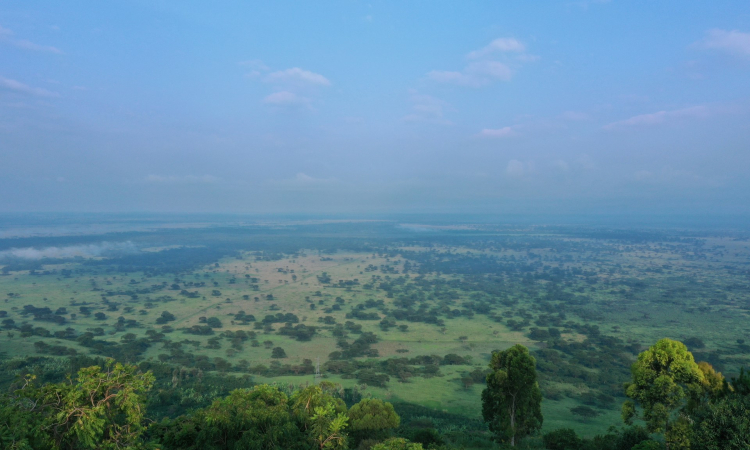
Queen Elizabeth National Park in February – Queen Elizabeth in February has little or no rainfall and hot days, especially in the afternoons. Temperatures range between 29–33°C during the day, and the nights are cooler.
Be sure to pack warm clothes for the night, such as long-sleeved shirts and trousers. The roads are dry and easy to use, but they can get dusty.
The dry trails make walking safaris easier in February, as visitors enjoy a quiet walk and connect with nature away from vehicle noise. During these walks, you can see things you might miss on a game drive, such as plants, butterflies, birds, and other insects.
You can explore places like Kyambura Gorge, Mweya Peninsula, and the Ishasha sector. Make sure to wear comfortable ankle boots and pack drinking water, sunglasses, a safari hat, sunscreen, light neutral-colored clothes, and binoculars.
The dry and thin savannah plains offer good wildlife viewing. The Kasenyi plains, located north of Kazinga Channel, are known for spotting buffaloes, Uganda kobs, elephants, warthogs, spotted hyenas, and lions.
Early morning, around 6 am, is the best time to start a game drive if you want to see lions. Other good spots for game drives in February include Mweya Peninsula, south of Kazinga Channel, where you can see leopards, bushbucks, and hippos as they graze.
The Ishasha sector is also good for spotting tree-climbing lions, topis, and various birds. Other activities tourists can enjoy include chimpanzee trekking in Kyambura Gorge, visiting nearby villages for cultural experiences, and taking a boat cruise along the Kazinga Channel to see crocodiles and hippos in the water.
Plan most of these activities early in the morning or late in the afternoon when the heat is not too strong. Animals also rest in the shade during the hot afternoons.
February is part of the peak season in Queen Elizabeth, so book your accommodation early as the park becomes busy. Lodges and camps range from luxury to budget, and it is best to book 2 to 3 months in advance during this time. There are fewer mosquitoes in February because the seasonal lakes dry up, which lowers the risk of malaria in the park.
The weather in February is good for exploring Queen Elizabeth National Park, with many chances to see wildlife and enjoy nature.


